Finished 7/24/26
So, as mentioned in my About Me, I'm a volunteer with a bird banding station, because I love working with animals and I love birds so it's perfect. It's a little brutal getting up more than a hour before sunrise, so I can get to the location and help set up the mist nets, but it's so worth!!! And it's really nice chatting with the people there, the majority of them are lovely and fun people!
For those of you who don't know what bird banding is and would like to, here's a basic rundown: bird banding involves capturing birds (sometimes species-specific sometimes any species), taking demographic information and more on the bird (age, sex if possible, wing length, missing feathers, presence of parasites, disease signs, etc.) on the bird, giving them a metal or colored band on their leg with a unique number code so we can know if the bird is a recapture and what individual the bird is, then releasing the bird back into the wild. The station I work with is a all-year station where we capture any species.
All this is one of the best way to gather very specific demographic information that you can not consistently accquire through less hands-on methods like playback surveys, such as monitoring disease, tracking individual's migration, noting morphological regional or over-time differences, etc. Because you are working directly with these animals to some risk to them, stations can only be started and run with the approval of a masterbander and with the supervision of a masterbander or sub-permitted individual.
To capture birds, we use mist nets, which are specialized nets you cannot buy unless you have a masterbander permit. They're thin but strong, and you set them up in a loose way so the bird bounces off the net into a "bag" made from a sagging section of the net rather than hurting themselves. Because birds are most active after sunrise, we have to arrive on location to set up the nets before sunrise, which can take around a hour depending on how many volunteers are present, how many nets are getting set up, and whether or not the nets were properly put away (less they become tangled and difficult).
Since right now I'm at my parent's house in a wretched urban sprawl hellscape, I am not going to bird banding (very, very sad). So, until I get back and get back into it, here's a bunch of birds I've seen at the station for the past year-ish and more yapping from me.
So anyways, LOOK AT THIS COOL BIRDS FROM THE BIRD BANDING STATION!!
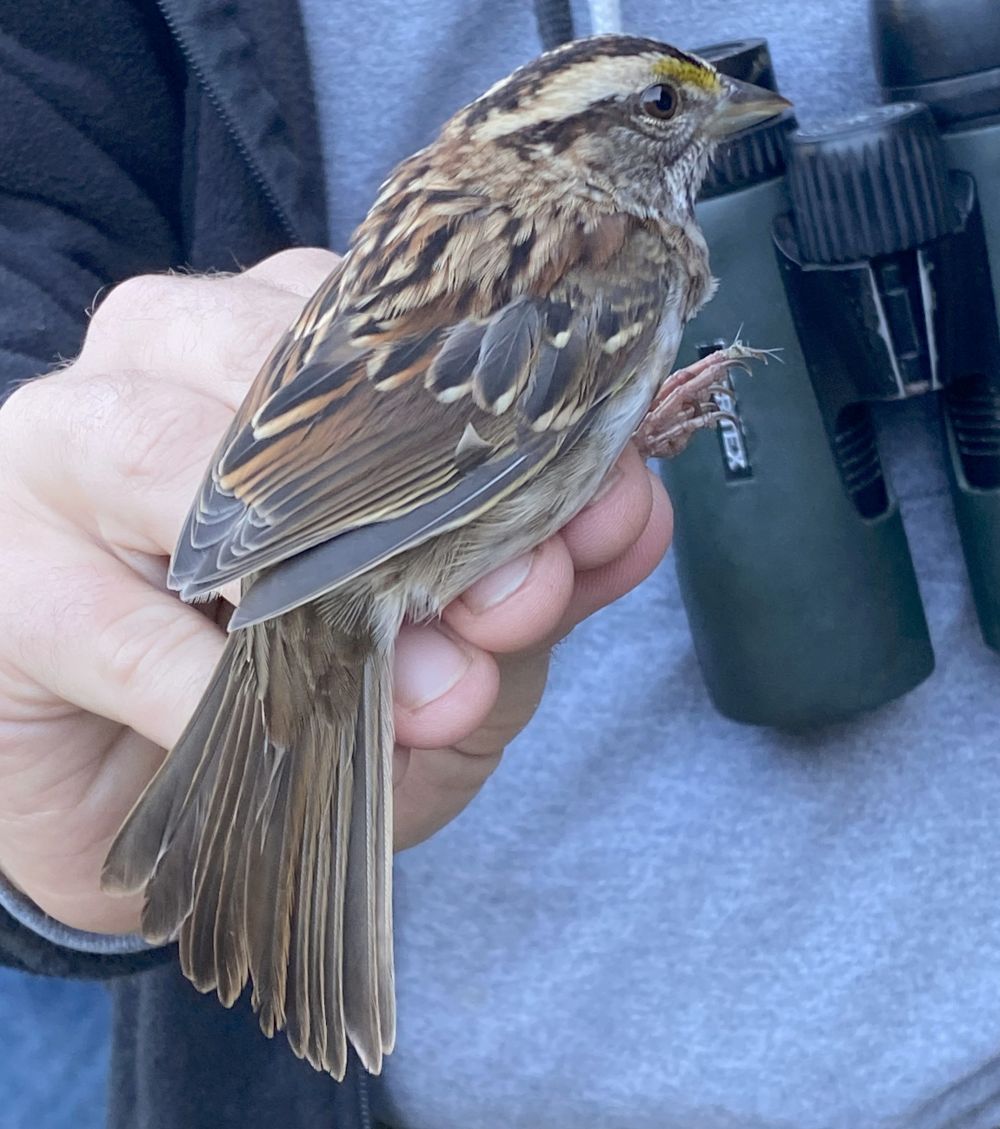
Let's start simple with the white-throated sparrow! This one here is what is called a tan morph. Birds can have different distinct phenotypes within the same species, which changes their plummage/morphology and sometimes their personality/behavior. In the WT sparrow's case, it is both, as these tan morphs are, as you may have guessed, more tan and gray than the white morph individuals, especially with their tan band above the eye rather than the stark white color white morphs have. Tan morphs in WT sparrow less aggressive and more nuturing than white morphs, who are instead aggressive and territorial.
Thus, generally they have the most successful nests when the couple are different morphs, with one parent to care for the babies while the other keeps predators and competition out, so much so that the rates of breeding between same-morph pairs is INSANELY low, like lower than some species' hybridization rates. Scientists also generally consider these birds to functionally have 4 sexes, because white and tan morphs refuse to mate with a individual of the same morph (and these morphs are completely unrelated to the male-female sex), so a female white morph will not mate with a male white morph, and vice versa.
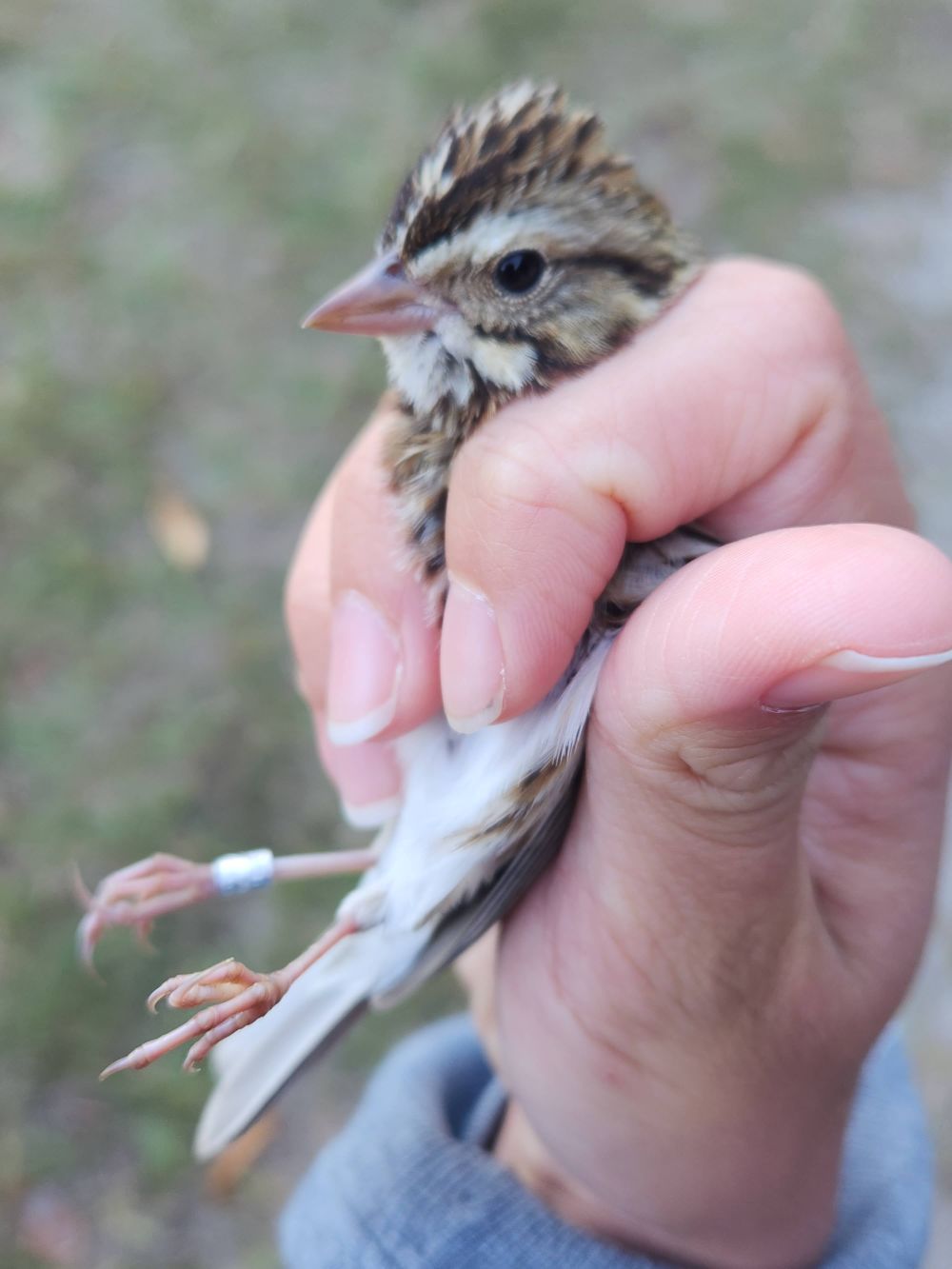
This image is kind of ridiculous, my friend took it and somehow managed to make the bird slightly out of focus while he's also just kinda posed weird?? It's kinda awesome. Anwyay, this silly little guy is a savannah sparrow. If you look up savannah sparrows, you may notice that all the photographed birds tend to have yellow in that white eyebrow band, but there actually is some heavily individual variation in how much yellow (if any) is there. Which I think is cool but it can make ID harder if you a sparrow struggler (which many are). I've gotten better entirely because our masterbander is a sparrow lover and he's much better at explaining differences than bird guides do (he thinks they suck dick at it; which is me paraphrasing btw he did not actually say that).
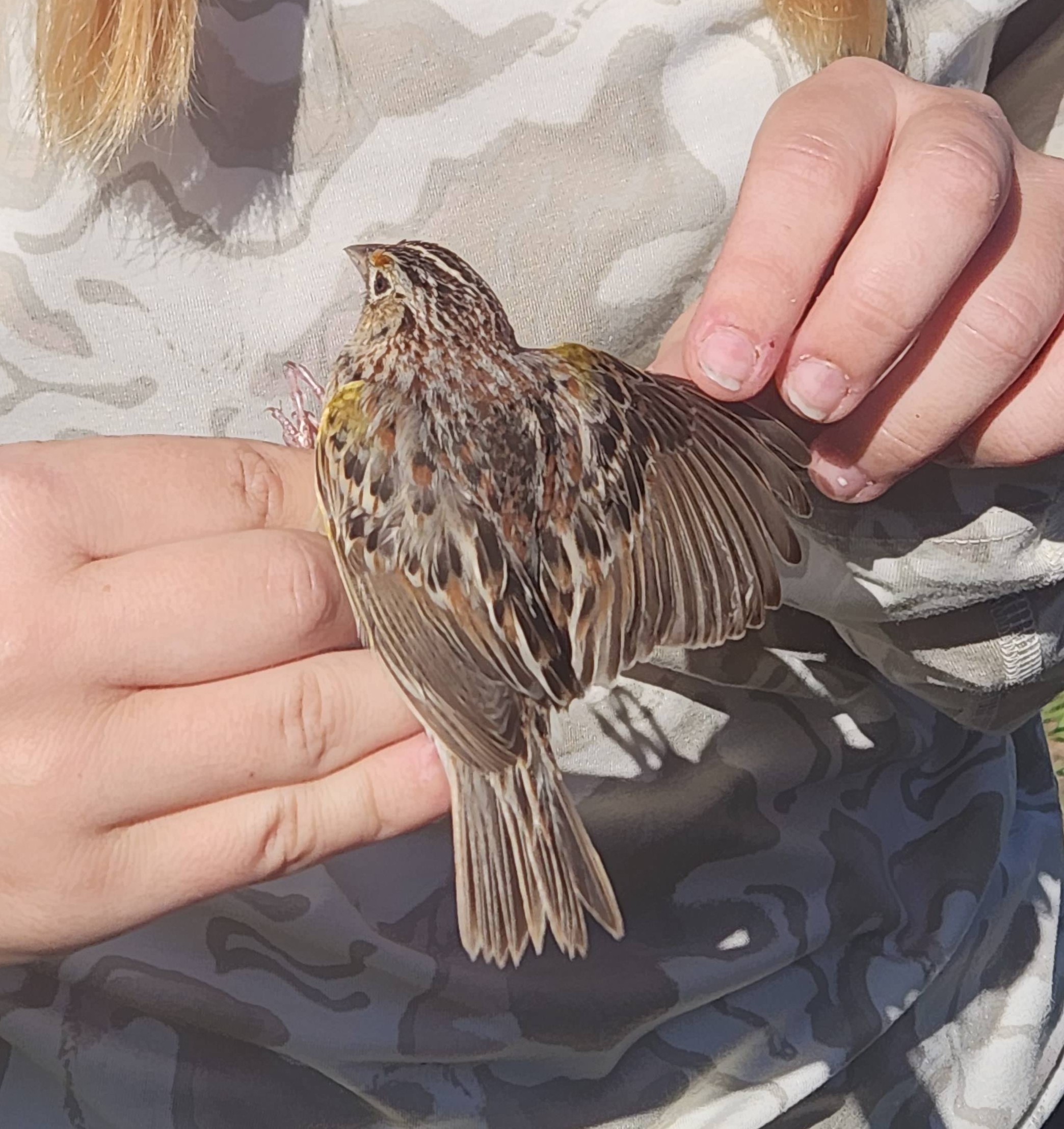
We're sparrowed-up rn. This lovely fella is a grasshopper sparrow, which you can tell because of that olive-green wash over the face and on that patch over the wrist joint (which is what is being displayed). When you want to extend a wing on a bird (either for measurement, molt or parasite check, or demonstrations) you need to gently grab the tip of their primary feathers and pull the wing open that way, as is being done here. Pulling directly on the bird's wrist is bad practice because it causes much more strain on the muscle and can be damaging if pulled out like that for extended periods.
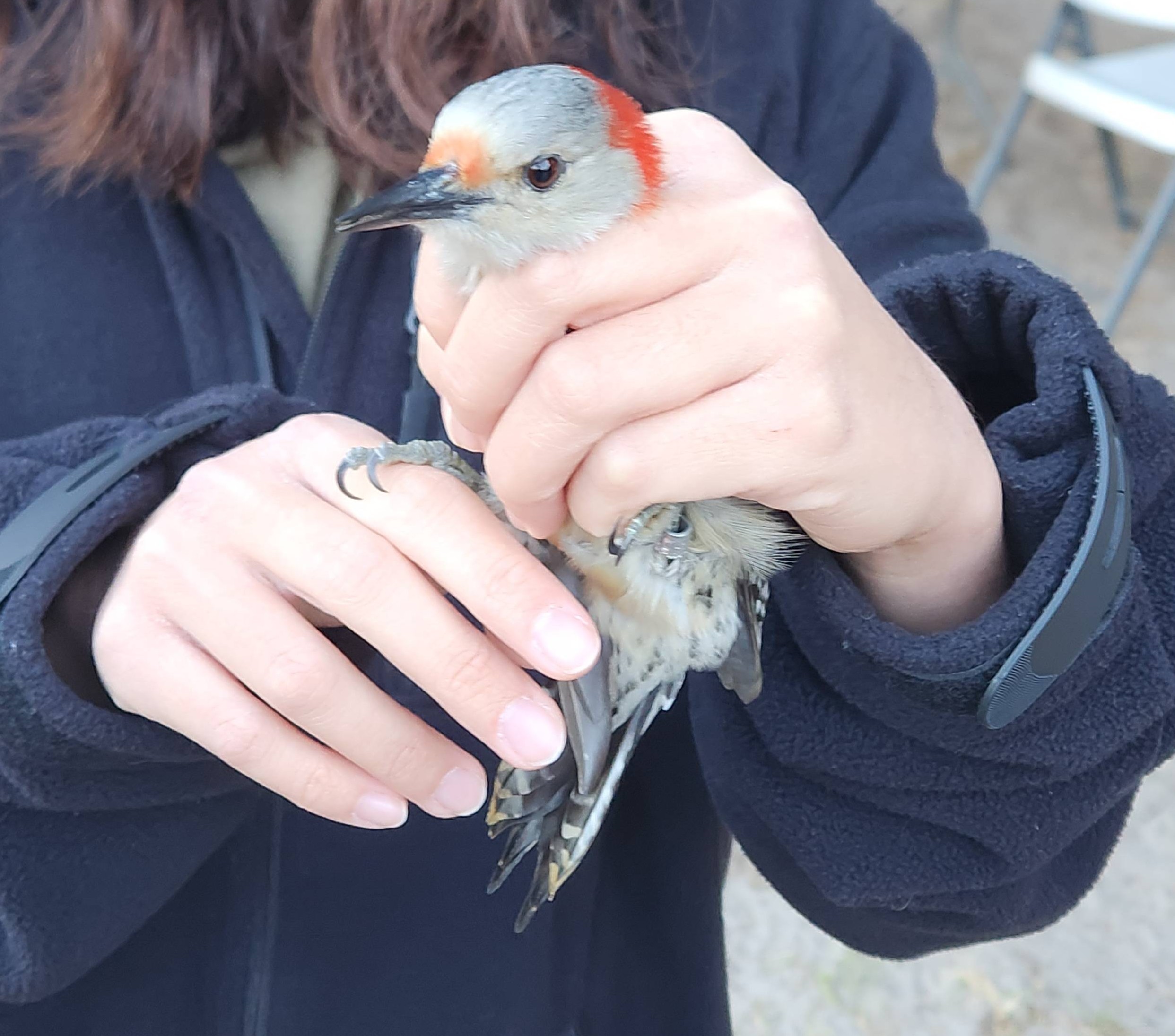
Look how silly she is!!!! This is a lady red-bellied woodpecker, which you can tell because of that gray cap (males have a full red head and nape). Woodpeckers actually have a tendency to "punch" things with their long ass tongues, which is all find and dandy until they get their tongue stuck in the mist net (which is hard to remove and threatens cutting circulation). This lady was fine, but I did have to run my ass all the way back to the station to grab a pick we use to get under tight net and run back just in case. Also (especially for medium-sized birds), it's good practice to let them hold onto your fingers with their feet if possible because it makes them feel more secure and they'll freak out less.
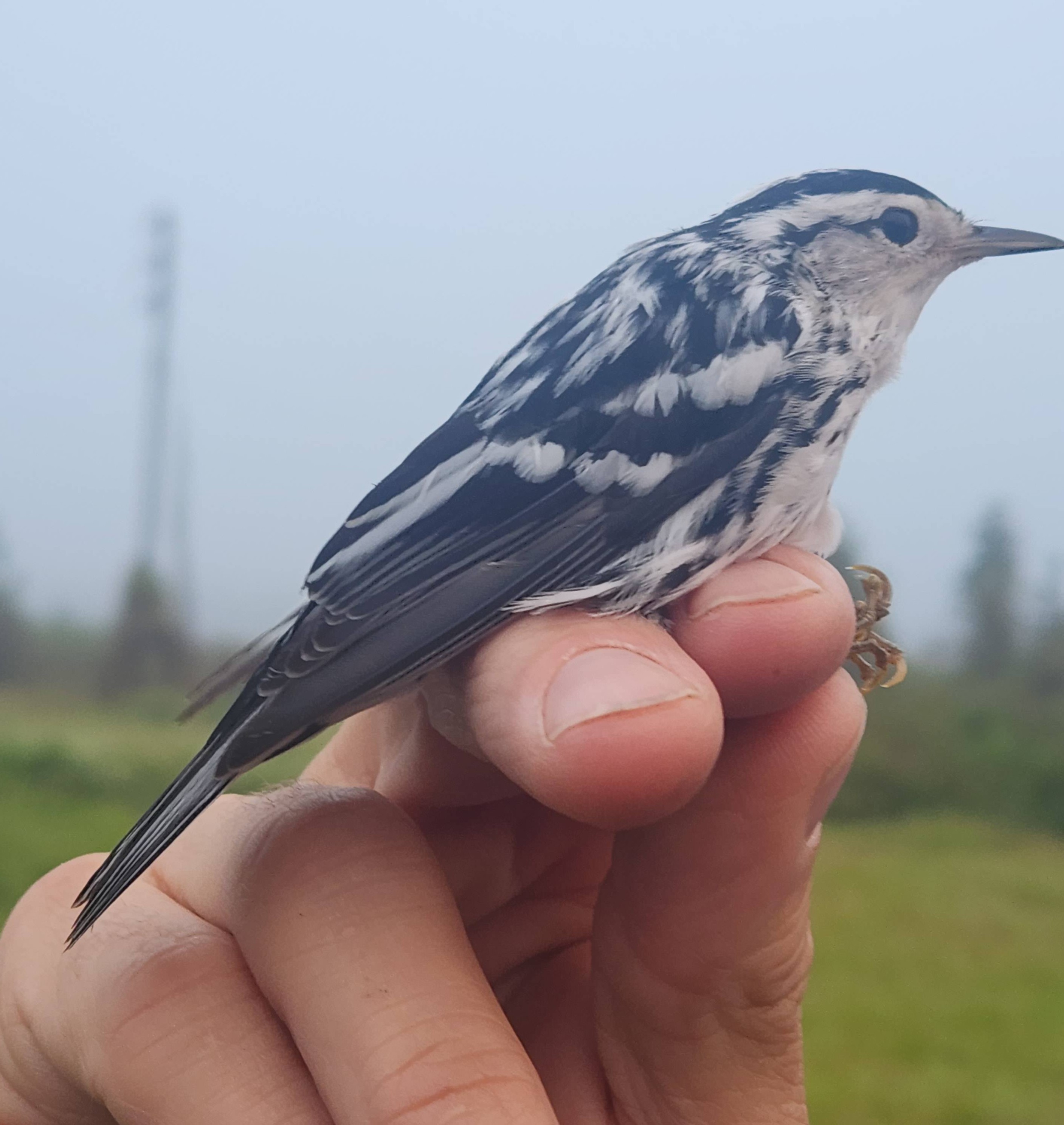
Look at her mogging the camera. This lady is a female black-and-white warbler, which I find to be one of people's favorite new-world warblers (which is fair they're very cute and funny). You can tell she's female because she doesn't have a very thick black eyeband and is more white on the bottom, while males are heavier on the striping. BW warblers are actually very unique in new-world warblers due to their feet arrangement (which are yellow on the bottom btw, it's soooo cute) so that they can actually move similar to woodpeckers and circle around and hang from the bottom of branches, which no other warbler I know of does.
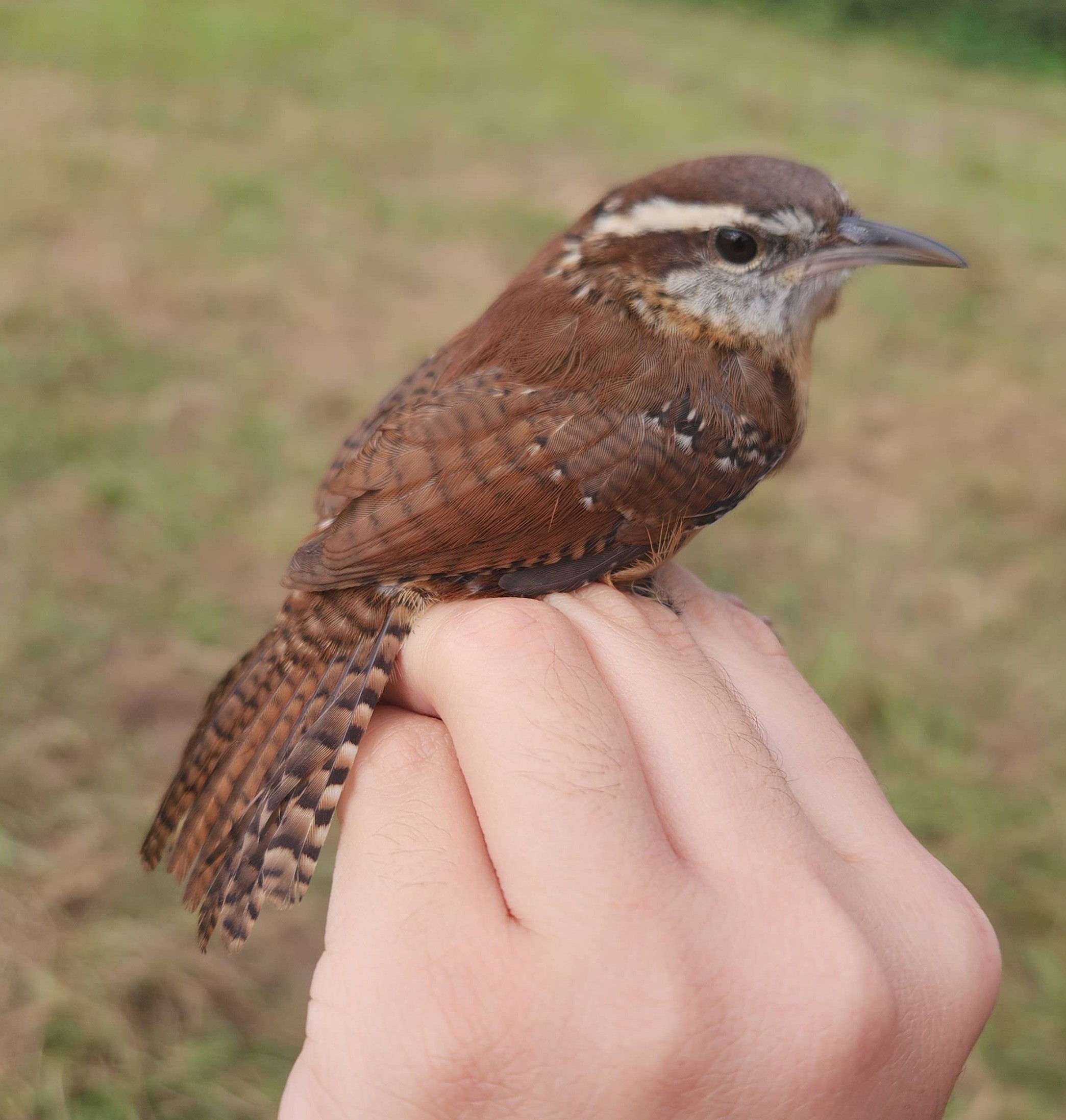
I'm a terrible birder in the fact I really don't have a lot of motivation to chase rare birds (don't get me wrong they're cool!) but I love watching very common, arguably dull birds. That is to say, I LOVEEEEE Carolina wrens like this guy here, they're so so sosososooso fucking cute dude. The way they scuddle around on the ground and wave their trails way high up?? Their silly, very diverse calls? Ohhh mann. Little brown birds <3
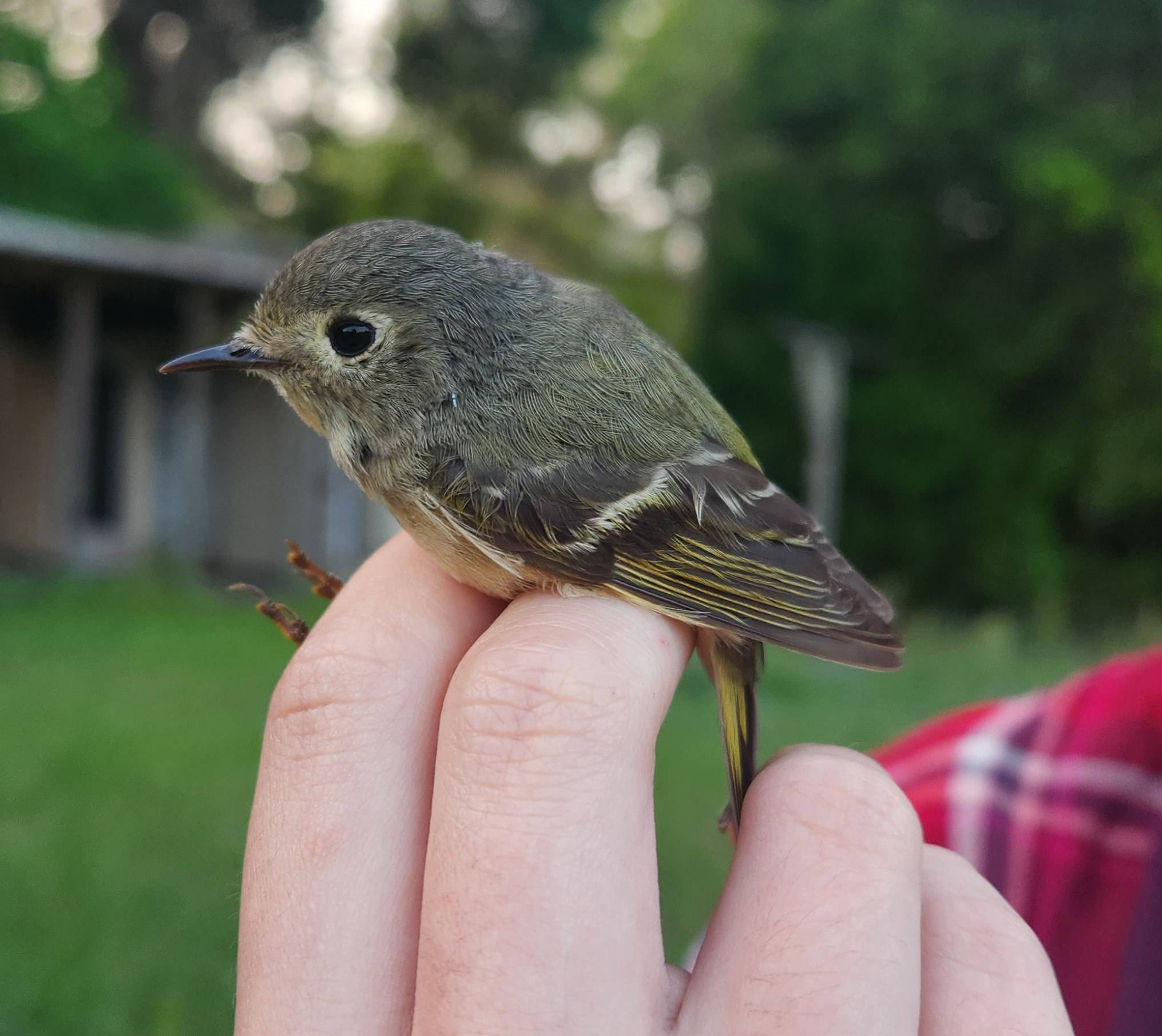
This is the first bird I ever banded myself!! That's me holding her with my gay ass flannel. Having a ruby-crowned kinglet as my first band stressed me out, can you tell how small that little guy is??? My hands are not big bro; RC kinglets average a weight of FIVE GRAMS. Actually smaller than a potato chip bro, she is like 2 blueberries. You can't tell her sex off this image, but the main difference is males have the "red crown" hidden and puff it up as a display, so when I moved her head feathers I saw she didn't have any red hidden.
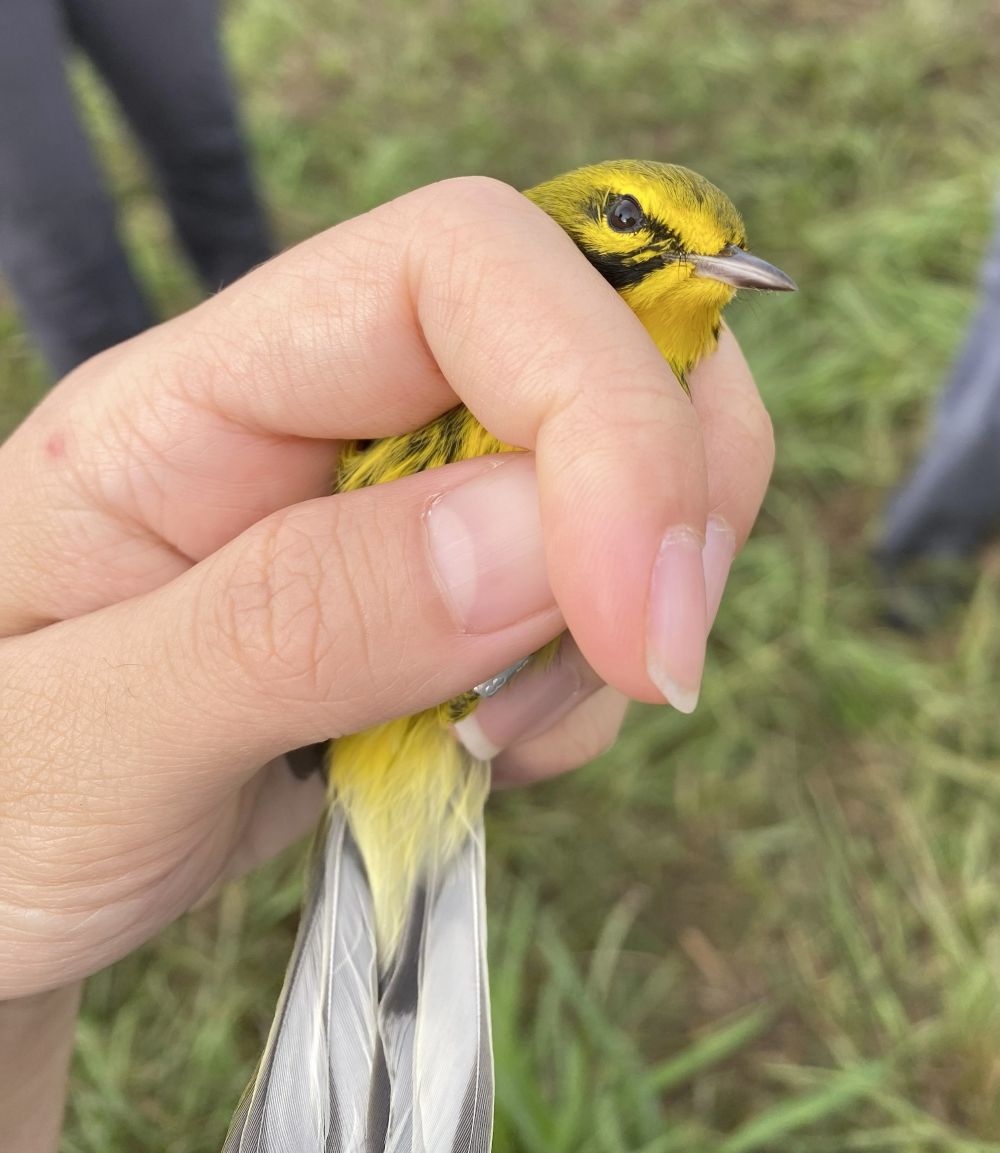
Look at this lovely male prairie warbler! You ID based off his yellow/green and black bands with that little semi-circle under his eye. There are two methods of holding a bird used in bird banding, the photographers and the banders grip. This photo is banders grip, where you circle your fore and middle finger around their neck and curl the rest of your fingers. So long as your fingers are touching their neck, you can keep your grip very light and gentle while still securing the bird; we sometimes call it the seatbelt. Photographers has been used in most of these other photos, where you hold the base of their legs right against their flank against the top of your fingers while you lightly pinch their ankles (which cannot be crossed); this is a little harder to do since the bird is fully capable of flapping their wings and tweaking out if they so desire and is generally only done while extracting the bird or getting photos/doing public demonstrations (hence the name).
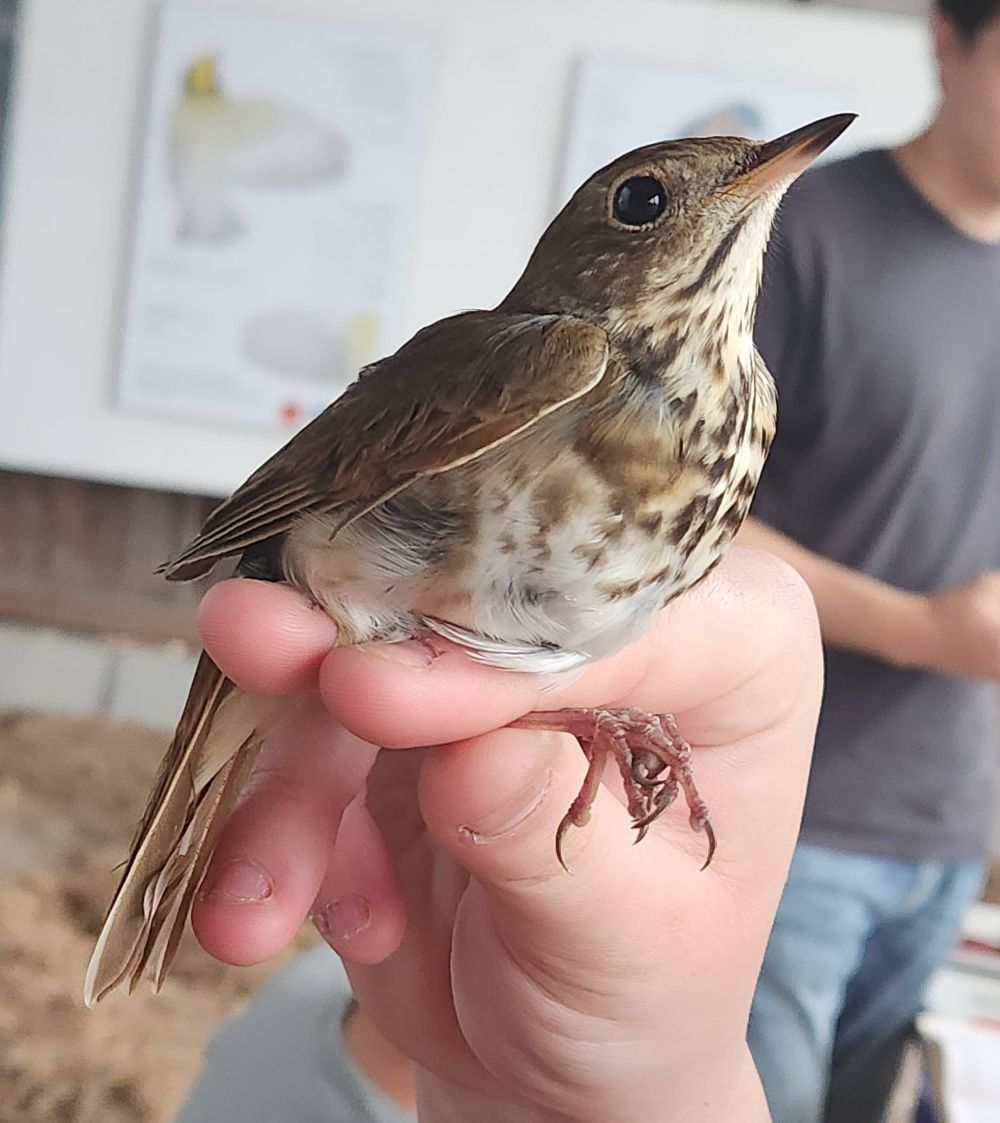
LOOK HOW POLITE HE ISSSSSSS HES SO FUCKING CUTEEEE. I could peer into those big old eyes all day, god i love little brown birds. This silly is a hermit thrush (hermie!). I have no additional notes just admire him please.
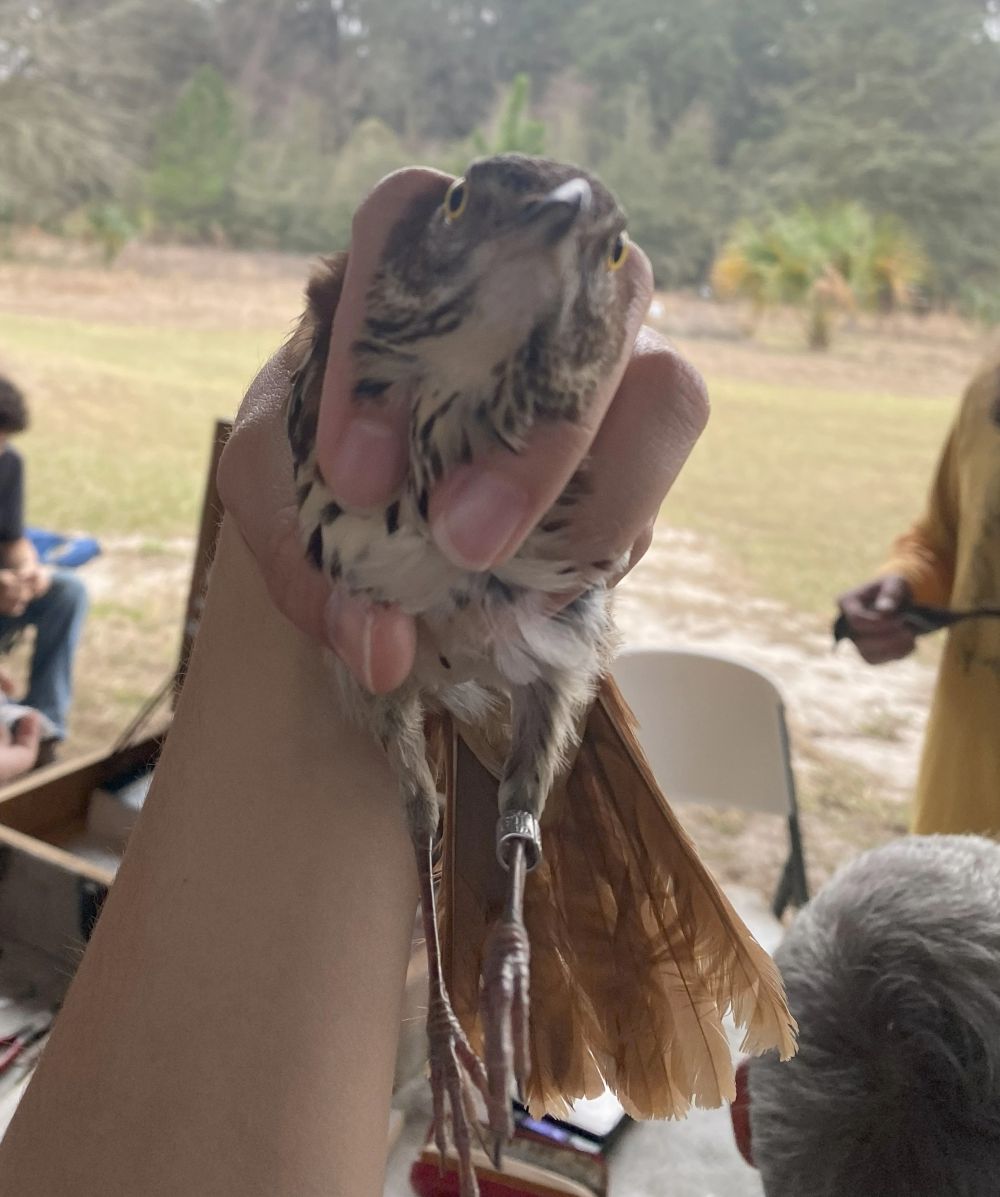
Same day as hermie, but a little less photogenic, a brown thrasher! Look how fucking tall he is dude. Once again thank my friend for somehow getting the bird in their hand out of focus xoxo. You can see the bird band in this one tho! You can tell it's a little loose, but not loose enough to slip off, which we do to make sure it's not rubbing and irritating the skin of their legs or cutting circulation if the area becomes inflammed for whatever reason.
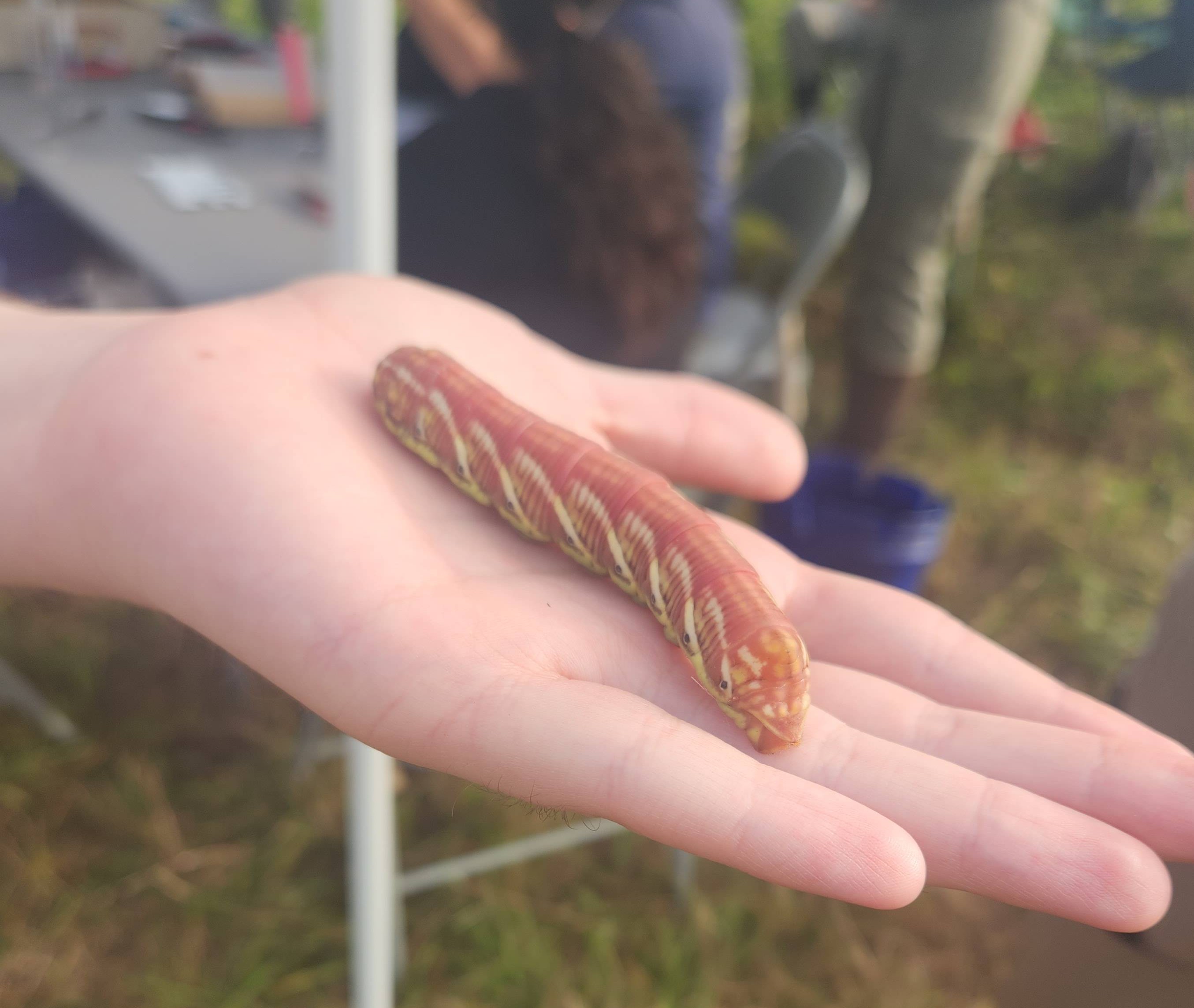
Definitely not a bird but he was found during bird banding look at this fucker??? He's massive??? He literally weights more than those kinglets. So cool.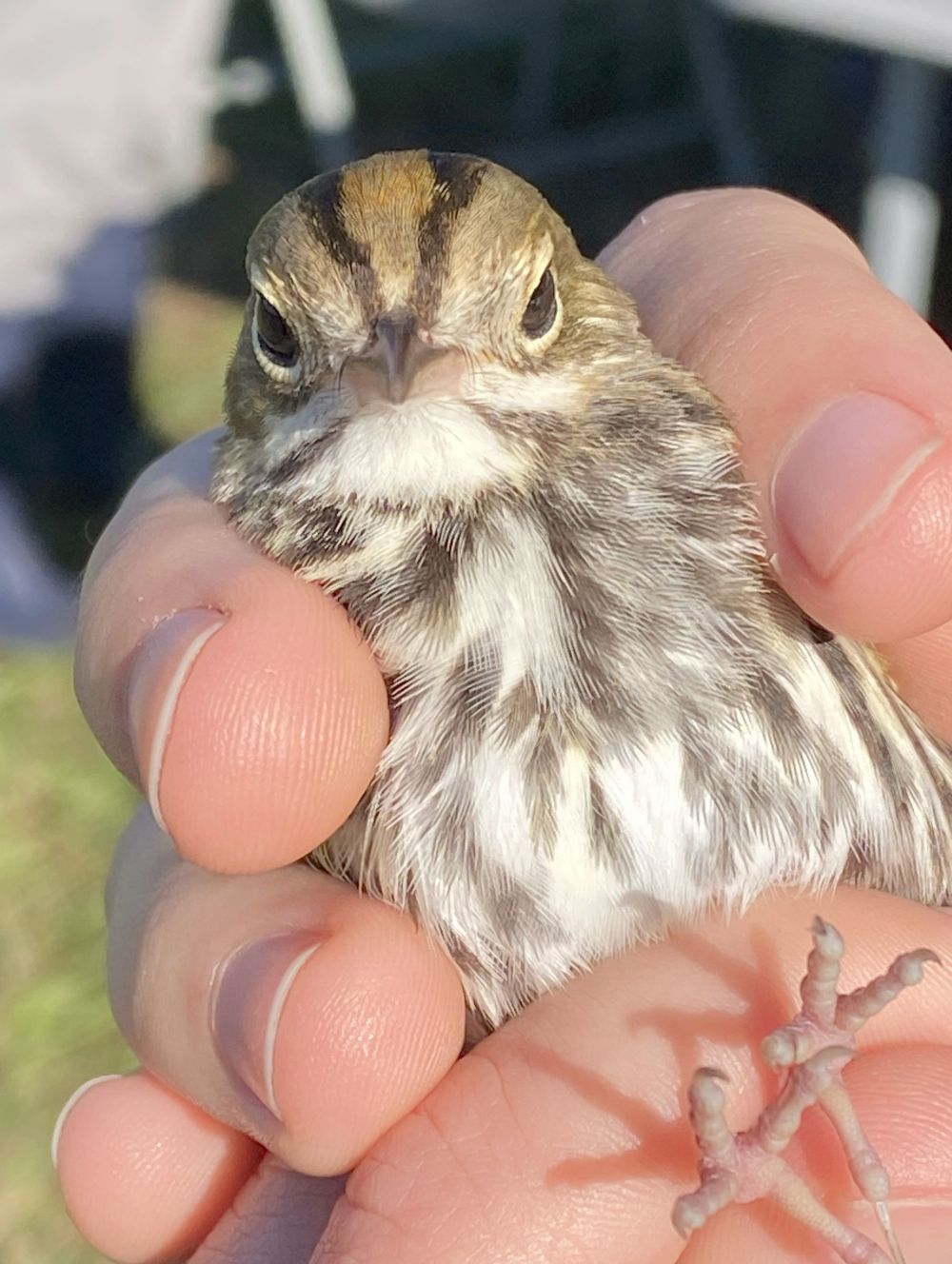
OVENBIRDDDDDDD. His bird banding code (a four letter code we use for bird names when collecting data so we don't have to write the whole ass name)m is just OVEN :) . He looks so angry with those little crown bands. Look at his little feet! They're called ovenbirds because their nests are built on the ground in a dome shape that resembles old-fashion brick ovens (it's also suggests the shape and material helps trap heat in the nest, like a oven). Personally, I think their nests look like kilns you'd fire clay in.
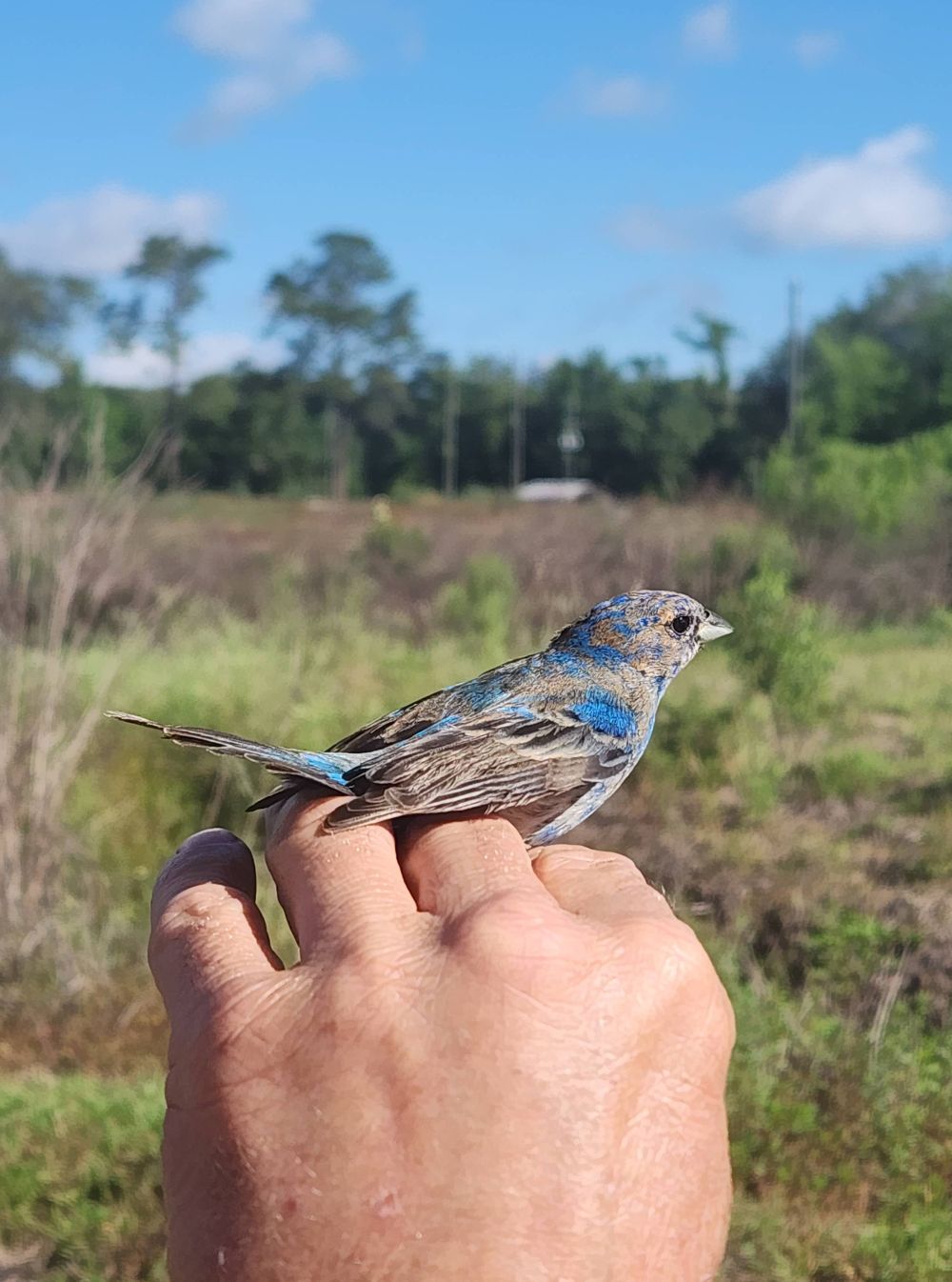
Saving some of the best for last as a reward if anyone actually reads this ;) . Look at his guy????? What a jewel! He's a juvenile indigo bunting thats just starting to molt his feathers into his adult feathers (which are blue and shiny), but since he's still in this transitional phase he's got this patchy brown and blue that is just soooo gorgeous. This guy was a absolute celebrity at the station when we got him.
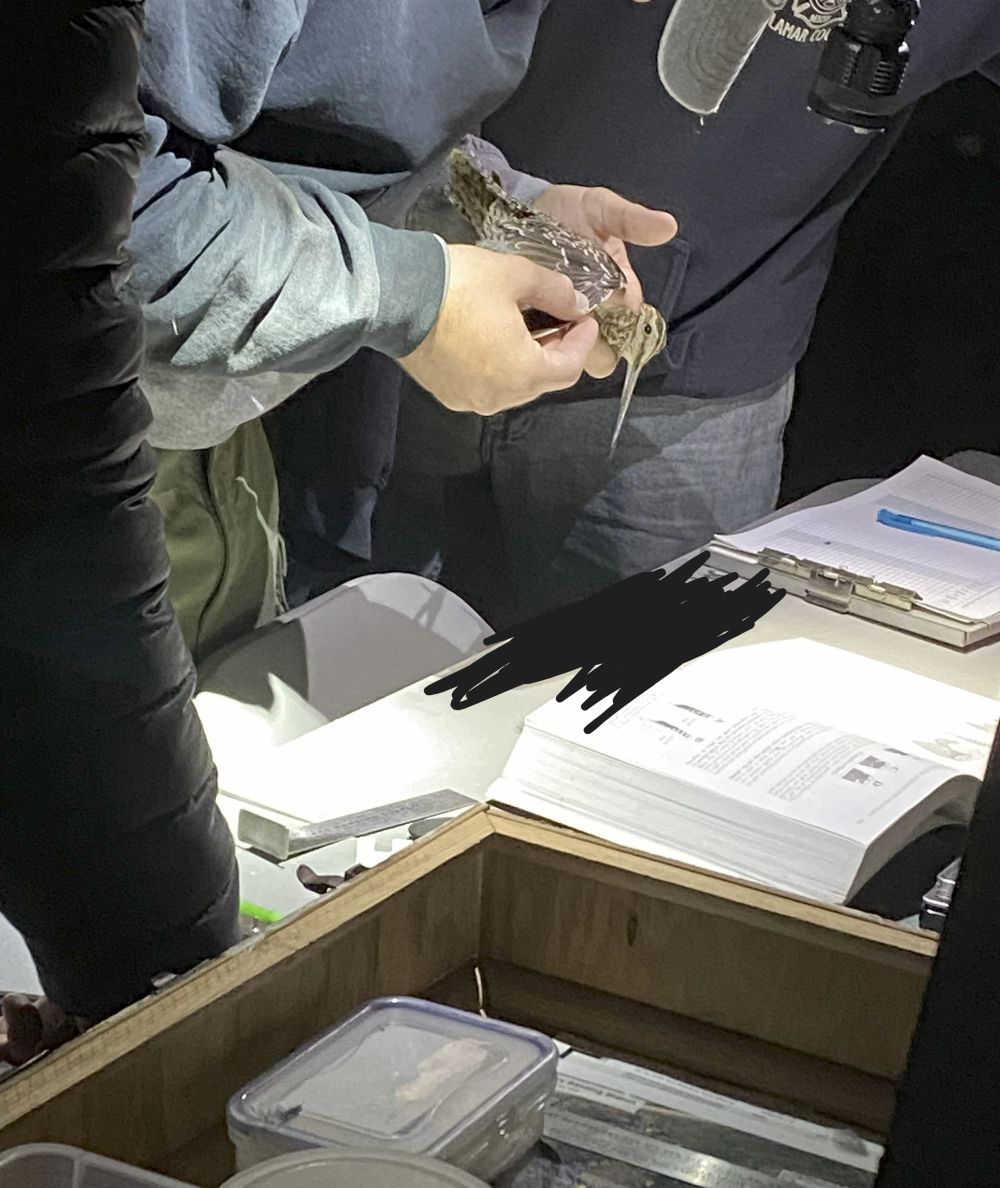
Finally, if you look across the table, a SNIPE! We almost never get birds like this because they don't fly much and they're nocturnal, but this was weird because he didn't go in the net. One of our more experienced volunteers was setting up a net and accidently startled this snipe, who decided instead of flying away, was going to fly directly at him. And he just, caught it????? Like with this hands?????? It was actually fucking insane. Anyways, look at that silly little face and bill!
That's all I got for now, but expect more (probably shorter) entries when I get back to my college town!! I miss bird banding sm right nowwwwww
So, as mentioned in my About Me, I'm a volunteer with a bird banding station, because I love working with animals and I love birds so it's perfect. It's a little brutal getting up more than a hour before sunrise, so I can get to the location and help set up the mist nets, but it's so worth!!! And it's really nice chatting with the people there, the majority of them are lovely and fun people!
For those of you who don't know what bird banding is and would like to, here's a basic rundown: bird banding involves capturing birds (sometimes species-specific sometimes any species), taking demographic information and more on the bird (age, sex if possible, wing length, missing feathers, presence of parasites, disease signs, etc.) on the bird, giving them a metal or colored band on their leg with a unique number code so we can know if the bird is a recapture and what individual the bird is, then releasing the bird back into the wild. The station I work with is a all-year station where we capture any species.
All this is one of the best way to gather very specific demographic information that you can not consistently accquire through less hands-on methods like playback surveys, such as monitoring disease, tracking individual's migration, noting morphological regional or over-time differences, etc. Because you are working directly with these animals to some risk to them, stations can only be started and run with the approval of a masterbander and with the supervision of a masterbander or sub-permitted individual.
To capture birds, we use mist nets, which are specialized nets you cannot buy unless you have a masterbander permit. They're thin but strong, and you set them up in a loose way so the bird bounces off the net into a "bag" made from a sagging section of the net rather than hurting themselves. Because birds are most active after sunrise, we have to arrive on location to set up the nets before sunrise, which can take around a hour depending on how many volunteers are present, how many nets are getting set up, and whether or not the nets were properly put away (less they become tangled and difficult).
Since right now I'm at my parent's house in a wretched urban sprawl hellscape, I am not going to bird banding (very, very sad). So, until I get back and get back into it, here's a bunch of birds I've seen at the station for the past year-ish and more yapping from me.
So anyways, LOOK AT THIS COOL BIRDS FROM THE BIRD BANDING STATION!!
Let's start simple with the white-throated sparrow! This one here is what is called a tan morph. Birds can have different distinct phenotypes within the same species, which changes their plummage/morphology and sometimes their personality/behavior. In the WT sparrow's case, it is both, as these tan morphs are, as you may have guessed, more tan and gray than the white morph individuals, especially with their tan band above the eye rather than the stark white color white morphs have. Tan morphs in WT sparrow less aggressive and more nuturing than white morphs, who are instead aggressive and territorial.
Thus, generally they have the most successful nests when the couple are different morphs, with one parent to care for the babies while the other keeps predators and competition out, so much so that the rates of breeding between same-morph pairs is INSANELY low, like lower than some species' hybridization rates. Scientists also generally consider these birds to functionally have 4 sexes, because white and tan morphs refuse to mate with a individual of the same morph (and these morphs are completely unrelated to the male-female sex), so a female white morph will not mate with a male white morph, and vice versa.
This image is kind of ridiculous, my friend took it and somehow managed to make the bird slightly out of focus while he's also just kinda posed weird?? It's kinda awesome. Anwyay, this silly little guy is a savannah sparrow. If you look up savannah sparrows, you may notice that all the photographed birds tend to have yellow in that white eyebrow band, but there actually is some heavily individual variation in how much yellow (if any) is there. Which I think is cool but it can make ID harder if you a sparrow struggler (which many are). I've gotten better entirely because our masterbander is a sparrow lover and he's much better at explaining differences than bird guides do (he thinks they suck dick at it; which is me paraphrasing btw he did not actually say that).
We're sparrowed-up rn. This lovely fella is a grasshopper sparrow, which you can tell because of that olive-green wash over the face and on that patch over the wrist joint (which is what is being displayed). When you want to extend a wing on a bird (either for measurement, molt or parasite check, or demonstrations) you need to gently grab the tip of their primary feathers and pull the wing open that way, as is being done here. Pulling directly on the bird's wrist is bad practice because it causes much more strain on the muscle and can be damaging if pulled out like that for extended periods.
Look how silly she is!!!! This is a lady red-bellied woodpecker, which you can tell because of that gray cap (males have a full red head and nape). Woodpeckers actually have a tendency to "punch" things with their long ass tongues, which is all find and dandy until they get their tongue stuck in the mist net (which is hard to remove and threatens cutting circulation). This lady was fine, but I did have to run my ass all the way back to the station to grab a pick we use to get under tight net and run back just in case. Also (especially for medium-sized birds), it's good practice to let them hold onto your fingers with their feet if possible because it makes them feel more secure and they'll freak out less.
Look at her mogging the camera. This lady is a female black-and-white warbler, which I find to be one of people's favorite new-world warblers (which is fair they're very cute and funny). You can tell she's female because she doesn't have a very thick black eyeband and is more white on the bottom, while males are heavier on the striping. BW warblers are actually very unique in new-world warblers due to their feet arrangement (which are yellow on the bottom btw, it's soooo cute) so that they can actually move similar to woodpeckers and circle around and hang from the bottom of branches, which no other warbler I know of does.
I'm a terrible birder in the fact I really don't have a lot of motivation to chase rare birds (don't get me wrong they're cool!) but I love watching very common, arguably dull birds. That is to say, I LOVEEEEE Carolina wrens like this guy here, they're so so sosososooso fucking cute dude. The way they scuddle around on the ground and wave their trails way high up?? Their silly, very diverse calls? Ohhh mann. Little brown birds <3
This is the first bird I ever banded myself!! That's me holding her with my gay ass flannel. Having a ruby-crowned kinglet as my first band stressed me out, can you tell how small that little guy is??? My hands are not big bro; RC kinglets average a weight of FIVE GRAMS. Actually smaller than a potato chip bro, she is like 2 blueberries. You can't tell her sex off this image, but the main difference is males have the "red crown" hidden and puff it up as a display, so when I moved her head feathers I saw she didn't have any red hidden.
Look at this lovely male prairie warbler! You ID based off his yellow/green and black bands with that little semi-circle under his eye. There are two methods of holding a bird used in bird banding, the photographers and the banders grip. This photo is banders grip, where you circle your fore and middle finger around their neck and curl the rest of your fingers. So long as your fingers are touching their neck, you can keep your grip very light and gentle while still securing the bird; we sometimes call it the seatbelt. Photographers has been used in most of these other photos, where you hold the base of their legs right against their flank against the top of your fingers while you lightly pinch their ankles (which cannot be crossed); this is a little harder to do since the bird is fully capable of flapping their wings and tweaking out if they so desire and is generally only done while extracting the bird or getting photos/doing public demonstrations (hence the name).
LOOK HOW POLITE HE ISSSSSSS HES SO FUCKING CUTEEEE. I could peer into those big old eyes all day, god i love little brown birds. This silly is a hermit thrush (hermie!). I have no additional notes just admire him please.
Same day as hermie, but a little less photogenic, a brown thrasher! Look how fucking tall he is dude. Once again thank my friend for somehow getting the bird in their hand out of focus xoxo. You can see the bird band in this one tho! You can tell it's a little loose, but not loose enough to slip off, which we do to make sure it's not rubbing and irritating the skin of their legs or cutting circulation if the area becomes inflammed for whatever reason.
Definitely not a bird but he was found during bird banding look at this fucker??? He's massive??? He literally weights more than those kinglets. So cool.
OVENBIRDDDDDDD. His bird banding code (a four letter code we use for bird names when collecting data so we don't have to write the whole ass name)m is just OVEN :) . He looks so angry with those little crown bands. Look at his little feet! They're called ovenbirds because their nests are built on the ground in a dome shape that resembles old-fashion brick ovens (it's also suggests the shape and material helps trap heat in the nest, like a oven). Personally, I think their nests look like kilns you'd fire clay in.
Saving some of the best for last as a reward if anyone actually reads this ;) . Look at his guy????? What a jewel! He's a juvenile indigo bunting thats just starting to molt his feathers into his adult feathers (which are blue and shiny), but since he's still in this transitional phase he's got this patchy brown and blue that is just soooo gorgeous. This guy was a absolute celebrity at the station when we got him.
Finally, if you look across the table, a SNIPE! We almost never get birds like this because they don't fly much and they're nocturnal, but this was weird because he didn't go in the net. One of our more experienced volunteers was setting up a net and accidently startled this snipe, who decided instead of flying away, was going to fly directly at him. And he just, caught it????? Like with this hands?????? It was actually fucking insane. Anyways, look at that silly little face and bill!
That's all I got for now, but expect more (probably shorter) entries when I get back to my college town!! I miss bird banding sm right nowwwwww
